

2025 was a bit of a catch up period for me. Now, I’m generally late to the party when it comes to video games, but this year I’ve mostly been digging into my extensive backlog, and maybe carved away a decent chunk (yeah right). Plus, with my purchase of a Miyoo Mini Plus, my gaming habits got even more skewed to past releases. That said, I’m generally happy that I got to have my first taste of various IPs, like the Atelier and Yakuza series. It’s been a long time coming!
Now I want to talk about the best of the bunch, but it would be remiss to neglect mentioning the, err, honorable mentions.
- Cavern of Dreams is basically our rose-colored memories of N64 3D platformers come to life, with ample opportunities for exhilarating sequence breaks given sufficient technical skill.
- The Pokemon romhack community was on fire the whole 2025, but the very best like no one ever was were Super Mariomon and Pokemon Lazarus. And they somewhat occupy opposite ends of the spectrum, with Super Mariomon being an extremely ambitious hybridization of Mario and Pokemon, while Lazarus is a refinement of the classic Pokemon formula that can more than stand as its own entry in the series.
- Spider-Man: Miles Morales does not have nearly as good a story as its predecessor, but damn, by trimming out a lot of the “AAA game” fat, it becomes a leaner, meaner, web-swinger adventure.
- Chibi-Robo is actually quite simple if we consider only its mechanics, but it radiates untold amounts of charm just by simply having the miniature robot struggle against giants to perform even the simplest chores. This cuteness also lets the game blindside you with a surprisingly compelling family drama.
Alright, now that’s squared away, let’s get down to business. Serious business!
10. Nuclear Blaze
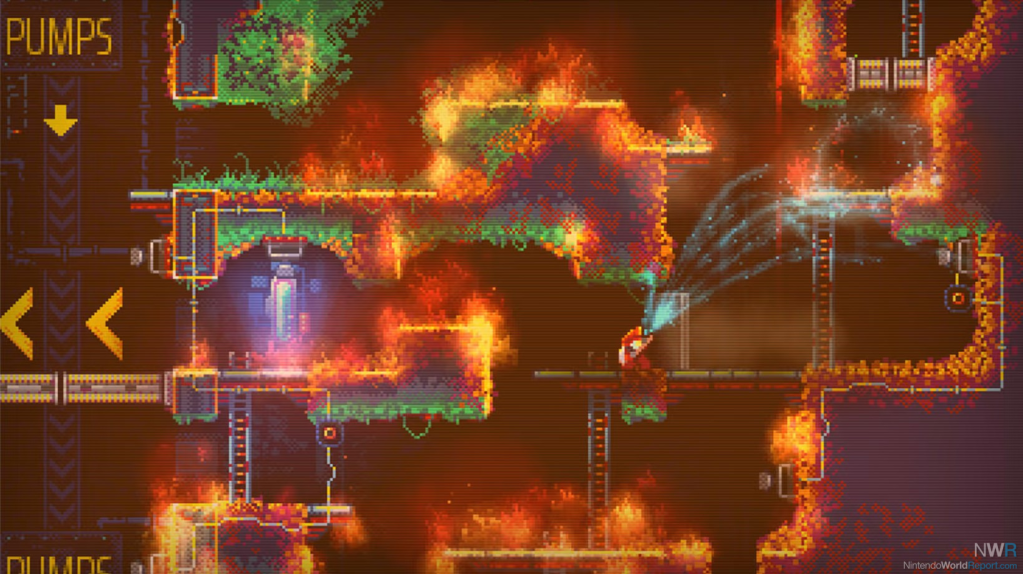
The job is simple: put out all the fires. But it’s not easy. The flames spread quickly (with demonic fervor at higher difficulties), and your water hose is limited in both range and supply. Each room then becomes a pulse-pounding puzzle on how to slowly secure ground against the blaze. You’re always scrambling at your feet to hose down the fires, then the game throws vulnerable gas tanks, falling debris and other hazards at you. The inferno howls and rages, and demands that you always stay vigilant.
I was also quite fond of the admittedly barebones story, which you’ll like too if you like SCPs and similar things. If not, well, Nuclear Blaze is still two hours of concentrated gaming adrenaline.
P.S. I would also like to commend the modular difficulty settings! You can set how much water you can carry, how fast the fire spreads, etc. so you can really customize your playtrough to your preferred level of stress.
9. Grindstone
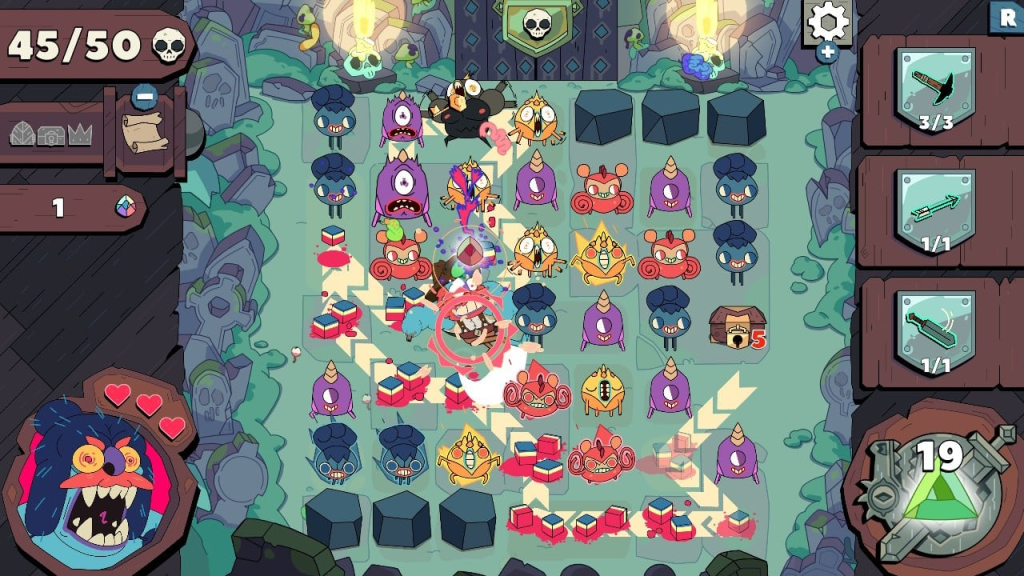
We’ve seen Match-3 games married to loot RPGs before, but I daresay few have captured the addictiveness of the likes of Diablo as well as Grindstone has. The big thing is that you’re not only matching colors. Every grunt you slay gives you one point of power, and you need a certain number of points to mine certain materials or defeat certain enemies. Defeating the bigger baddies lets you jump to another color if you choose, so you can keep extending the combo. Obviously, the longer the chains, the more goodies you earn! Which means more stuff to craft equipment with, which can considerably change up how you play. I was personally fond of the arrows that let you snipe specific tiles.
Another brilliant gimmick is that the level doesn’t end when you hit your quota. You can keep slaying monsters and farming loot, though it gets progressively more difficult to secure your escape route. It’s an exquisite balance of risk versus reward.
8. Street Fighter 6
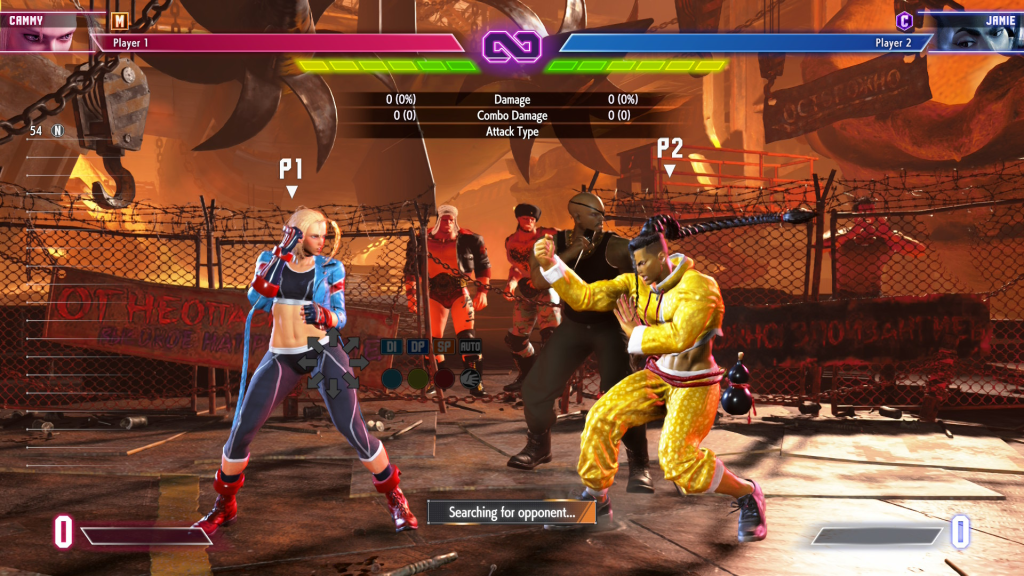
This might sound silly, but for me, Street Fighter 6 is to the Switch 2 as Mario Kart 8 Deluxe was to the Switch uno. Namely, it’s the game that I boot up, go “damn, that’s pretty” and marvel at how much power is packed into the dinky little tablet.
Of course, SF6 wouldn’t have made this list if looks were all it had going for it. I initially thought the main draw would be the World Tour singleplayer campaign, which is campy in all the right ways. However, instead I found myself getting into quick CPU matches every break I had, as the gods intended how fighting games should be played. That’s because SF6 is the most “fluid” the series has ever been for me, even without counting the (much appreciated) Modern control scheme. My fingers do not feel like they’re a half-step behind my thoughts, which makes it easier to get immersed in the heat of battle. Every fighter is easy to grasp but hard to master, and their distinct playstyles make it a blast to hammer on the random button.
Looks great, plays great. Probably won’t be leaving my SD card for the foreseeable future.
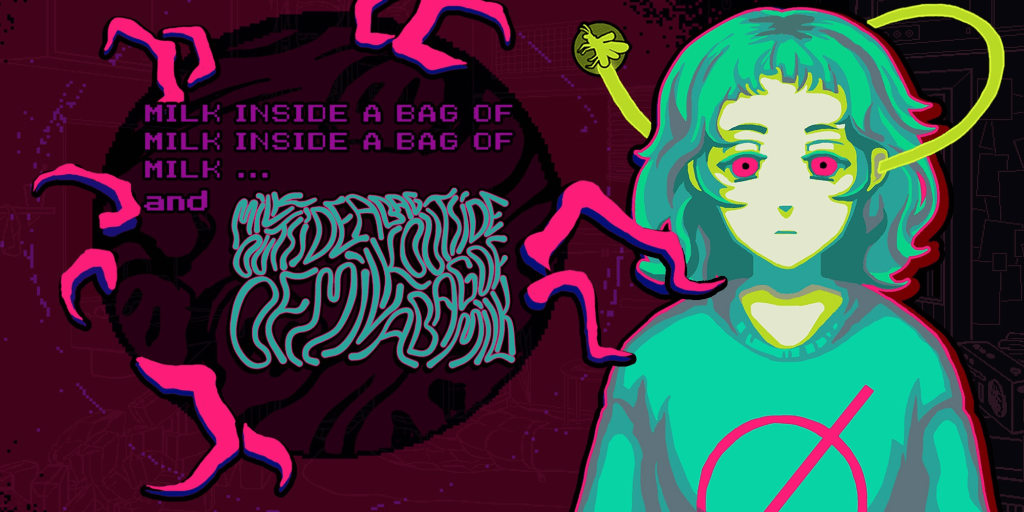
7. MILK INSIDE A BAG OF MILK INSIDE A BAG OF MILK
And its sequel, MILK OUTSIDE A BAG OF MILK OUTSIDE A BAG OF MILK. You have to play both.
The real question is how to convince you to play this without divulging what makes it so powerful. I suppose you could say that it’s a visual novel where you don’t play as the viewpoint character? Not exactly.
Sometimes there’s a voice inside your head that’s hard to ignore, and these games capture that uneasiness and etch it into you brain. Months later, I still find myself scratching at the scars.
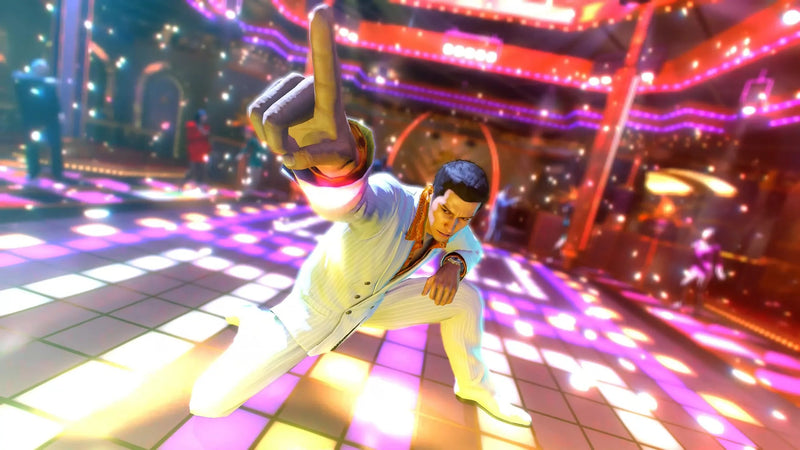
6. Yakuza 0
Ah, Yakuza. The bulk of my initial curiosity in this IP was singlehandedly nurtured by a certain sandwich-loving penguin on a certain online forum. What I understood was a crime drama in the form of a 3D brawler was in fact… well, that, plus a bunch of random stuff, which are also important. Apparently.
Basically, the side activities possess much of the charm and soul of Yakuza 0, and while the quality of these outings is uneven, I dare anyone to get bored with the sheer quantity and variety of stuff the game throws at you. You could find yourself peacefully fishing in the river. Masquerading as a producer for not-Michael Jackson. Winning toys from crane games for a pining kid. Sharing your appreciation for porn with a pervert. Yeah, I’m not too sure about that last one? Anyway, the point is, Kamurocho and Sotenbori are bustling with activity. You can easily lose hours, living the virtual city life.
As fun as hanging out in the cities are, I do have to say that the main story is gripping. It was legitimately hard to pace myself at some points, because I was desperate to know what happened next. Majima’s side of the story was especially merciless in that regard; I tore through his campaign like a Rottweiler set onto a slab of steak.
So overall, rough around the edges, but it has so much heart you can’t help but love it. I’m pretty much set on getting Kiwami in the near future.
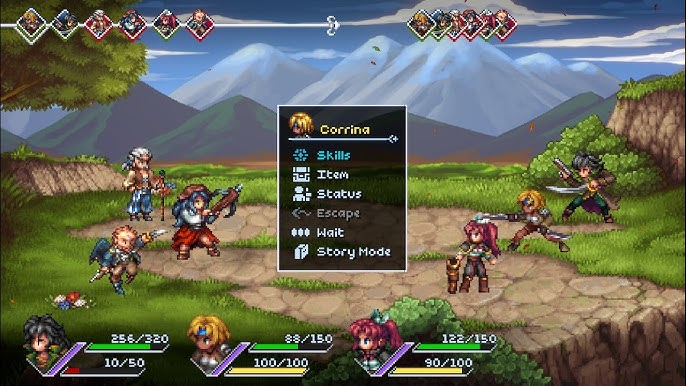
5. Rise of the Third Power
This RPG is easy to overlook. The sprite art can be cluttered, the character portraits amateurish, the soundtrack serviceable. One glance at the skill trees and you’ll clock that customization will be fairly limited, with your characters being more or less locked to specific roles. I did appreciate the swap and exhaustion mechanics, which encouraged you to use your full party, but all in all the combat is not the main draw.
No, it’s the story where Rise of the Third Power shines the most. In fact, I would go as far and say that JRPGs should at least aspire to its standard. This is especially impressive because the basic plot is rather straightforward, about a resistance movement aiming to stop a tyrant bent on world domination. I found myself locked in because of how developments dropped at a decent pace, and how each one felt like the organic consequences from the events that had transpired.
The cast is the crown jewel of the writing, though. Your motley crew of misfits are indeed bundles of quirks, but they’re also more grounded and layered than their superficial tropes might suggest. For example, your priestess is caring, kind and motherly… but she’s not above using emotional manipulation “for the greater good.” It’s a grittiness that I didn’t expect from this kind of story, that adds so much texture to its tale. Glad that a certain pixelated knight on the interwebs brought RotTP to my attention.
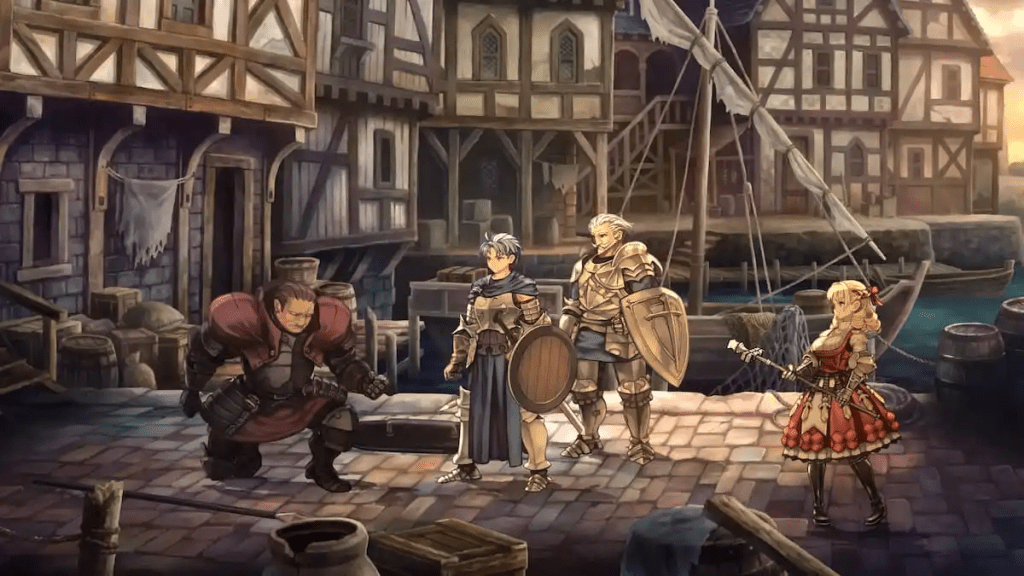
4. Unicorn Overlord
In contrast to the aforementioned Rise of the Third Power, the story in Unicorn Overlord is pedestrian at best. Alain and his band of rebels take from every fantasy JRPG trope you can think of, with little to distinguish them. When I’m calling characters by monikers like Spear Elf and Axe of Death, that shows how memorable you are.
But hey, you probably know where this is excerpt is going. Toss aside the script and instead focus on UO’s fresh take on strategy RPGs. To start off, you can freely explore the overworld map, instead of having the levels cordoned off from each other. You can visit towns, decipher ancient runes, and discover secrets tucked away in the bushes and riverbends.
Combat is incredibly fun! Battles play out in realtime, with you having to plan how your units traverse the map. You could decide to flank your enemies, or send your fliers to secure the towns. Then when your forces clash with the enemy, they automatically fight depending on how you set your skills. You’re basically programming how your characters will fight (or to put it in FF terms, you’re setting up your Gambits) and it’s easy to get hooked to optimizing your battle strategies. The encounter design also varies between straightforward skirmishes to more “puzzle-type” scenarios, so you’re given plenty of incentive to keep experimenting with your tactics. There’s room for improvement here, stuff that UO can learn from its SRPG brethren, and I sincerely hope Vanillaware iterate on this.
Oh, and let’s not forget how gorgeous this game looks. Outfits can tend to be too fanservice-y, but otherwise the artwork is sublime. In particular the seaside vistas can be rather inviting!
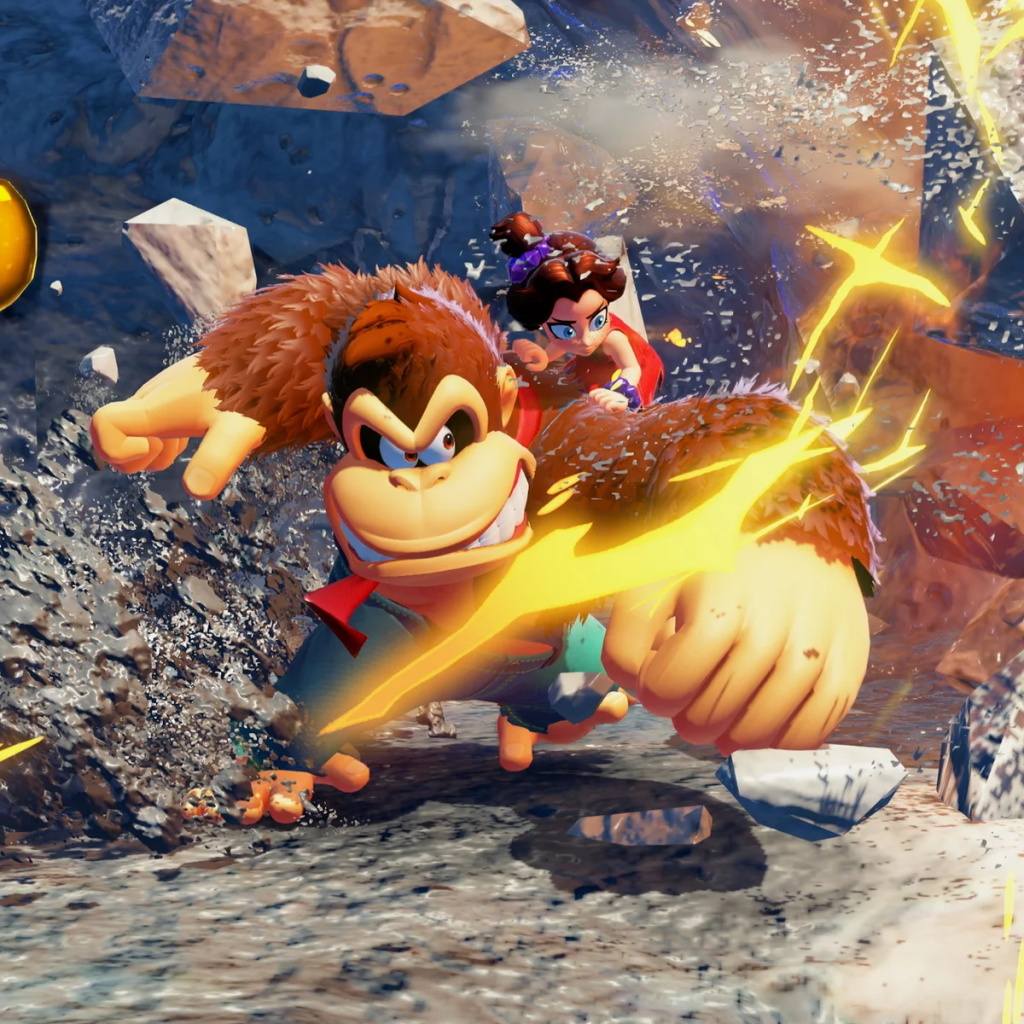
3. Donkey Kong Bananza
Is it any surprise that Donkey Kong Bananza is INCREDIBLE? It’s a 3D platformer with the full might of Nintendo’s devs behind it. Literal sorcery. They created a game about smashing levels apart, and somehow, even when everything is ground to dust, the level design remains impeccable. And a durable playground encourages the kids to wreak havoc, which is exactly what I did.
Part of the reason the levels can hold up despite the destruction is DK himself, or more specifically his considerable arsenal of skills. You start with simple rolls and jumps, then you discover new tricks like surfing, the Bananza forms, and my personal favorite, the ability to create your own platforms with soft materials. The number of traversal options combined with the density of the level design is dizzying, but it’s all intuitive and equally rewarding. I found myself tackling areas multiple times just to try different approaches. The theming of the sublayers was fantastic, too. Look, I like the usual Super Mario grasslands, but you can’t deny the appeal of a good-themed amusement park!
Perhaps the most surprising aspect, though, is that the story isn’t merely a barebones excuse for a driving goal. DK and Pauline have an adorable father-daughter dynamic you can’t help but root for, and Void Co has some of the most charismatic antagonists to ever grace Nintendo games. Heck, even the random NPCs successfully make you feel like the world is lived in. Oh ,and the ending sequence had me on cloud nine.
Like with Super Mario Odyssey, like with Kirby and the Forgotten Land, the developers could have simply adapted the classic ape into an orthodox, if polished, 3D platformer and it would have still been received well. Yet DK Bananza dares to make new strides for the genre, hell for video games in general, and damn do I love the ambition.
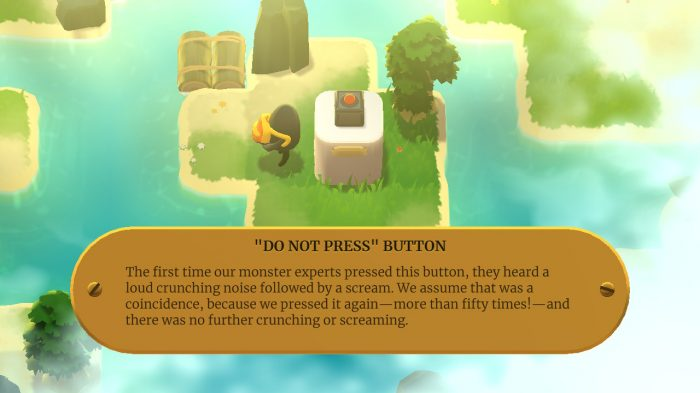
2. A Monster’s Expedition
A Monster’s Expedition starts with a simple conceit. It’s a sokoban, but the blocks are cylindrical logs. You push them one way and they’ll move one tile at a time as standard for the genre, but push them another way and they’ll roll til something stops them. All you have to do is make a bridge to get from island to island.
Like any good mindbender, these simple mechanics give way to increasingly complex conundrums. I was positively gobsmacked at how many puzzles the developers created, especially since there’s so few things to actually interact with. The number of permutations feels mathematically impossible!
Which brings us to its next great trick– it’s so deft at nudging you in the right direction. Every so often, you reach an island that subtly tells you to push the logs in certain ways, and voila, you’ve discovered a new thing you can do. And it’s something that you’ve always been able to do, you just didn’t know because you’ve never had to do it before. Then with a greater understanding of how the mechanics slot together, you realize that previous areas have other paths available to them. You realize just how open-ended the world is. It reminds me a lot of Outer Wilds in that regard.
Draknek & Friends have made/published some of the best puzzle games ever, and I think A Monster’s Expedition could be their finest craft yet.
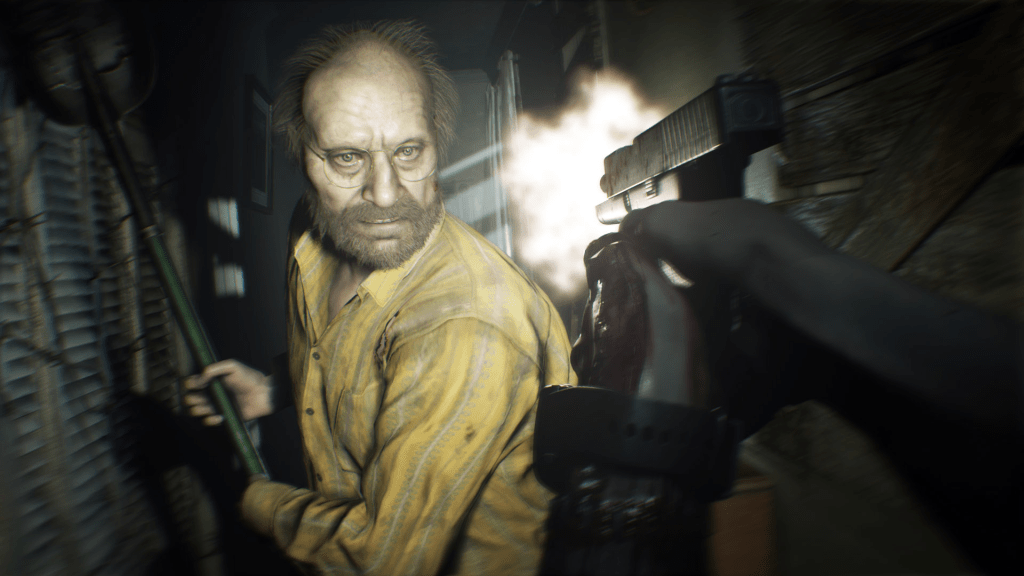
1. Resident Evil 7
Yeah, it took me far too long to get to this one. Between the shift to a first person perspective, which at the time I thought was ill-advised, and my less than stellar impressions of 5 and 6, I simply didn’t feel the need to jump into this day one. Then those days turned into years because 2017 (?!) is also when the Switch was released and there were so many good games to play.
What a fool past inkbag was, because Resident Evil 7 is arguably the purest distillation of the RE series since the very first one. The Baker House seems cramped and suffocating at first glance, but the rickety estate soon reveals its locked doors and snaking passageways, scratching the metroidvania itch that we so love. Familiarizing yourself with the layout is all the more important because you’ll want to find ways to get away from the various, nigh immortal spooks chasing after you.
Speaking of spooks, the Bakers are probably my favorite antagonists in the franchise. They’re not trying to conquer the world, they only want to add you to the family. That’s creepier, and that’s without even getting into spoiler territory.
The first person perspective did throw me off still, as I usually have difficulty navigating in 3D space in the first place. But hey, somewhat clunky controls usually help rather than hinder survival horror games. I can even chalk it up to Ethan being a regular civilian instead of a trained cop (never mind that he doesn’t exactly react like a normal person would). The tension is palpable, especially when you’re playing in the dark with headphones on. How I wish I had the opportunity to try this in VR.
So yeah, all those reviewers saying this was a return to form for the franchise? I get it now. This is a stone-cold classic, and I can’t wait to replay it.
Probably after I get through Village.
 quiche.cafe
Leave a comment